EPF
Energy Platforms
General Contracting Co. · Saudi Arabia
Giga-Project Insight · Red Sea Corridor
Engineering Tomorrow on the Red Sea:
Tourism, Infrastructure & Regeneration
The Red Sea Project in Saudi Arabia’s Tabuk region is redefining how luxury
tourism, infrastructure delivery, and environmental regeneration can coexist.
Built as a cornerstone of Vision 2030, the development is designed to operate
on 100% renewable energy, with conservation targets embedded directly into the
engineering brief.
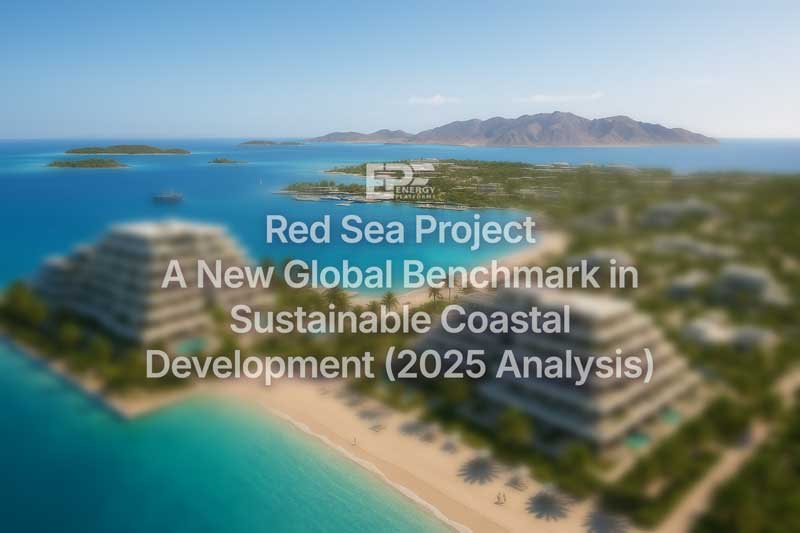
Red Sea Coastal Cluster
Destination Scale
90+ islands & sites
Conservation Target
+30% net gain
Economic Impact
70k+ jobs
Tourism & Destination Design
World-Class Tourism & Infrastructure
The masterplan connects luxury island resorts, inland wellness
destinations, and a new international airport into a single,
choreographed visitor journey designed around low-carbon mobility.
- 50+ resorts and hotels phased through 2030.
- Dedicated Red Sea International Airport with sustainable operations.
- Car-light visitor zones with e-mobility and marine transport.
Integrated Resorts
Smart Wayfinding
Airport–Island Connectivity
Engineering & Delivery
Engineering, Construction & Global Partnerships
Delivery is driven by digital planning, modular construction, and
multinational joint ventures that combine global expertise with Saudi
capability building.
- Marine works engineered around coral corridors and tidal flows.
- Off-site fabrication to reduce on-site footprint and rework.
- Global operators partnering with Saudi designers, contractors, and SMEs.
Marine Engineering
Digital Twins
JV Delivery Models
Regenerative Model
Sustainability & Environmental Stewardship
Instead of “minimize harm”, the Red Sea strategy is to leave the
ecosystem measurably better. Energy, water, waste, and habitat
protection are engineered as one integrated system.
- 100% renewable electricity from solar, wind, and storage.
- Zero waste-to-landfill and advanced water reuse schemes.
- Continuous ecological monitoring supported by AI and remote sensing.
Regenerative KPIs
Closed-Loop Systems
Ecological Dashboards
Infographic Snapshot · 2030 View
From Concept to Operating Destination
By 2030, the Red Sea Project is expected to welcome up to one million
visitors per year—on a footprint deliberately capped to protect carrying
capacity. The development is designed to contribute billions of SAR in
annual GDP while staying within strict carbon and biodiversity budgets.
Visitor Capacity (Annual)
1M guests
Capped to match ecological thresholds.
Energy Mix
100% RE
Solar, wind & storage micro-grids.
Local Content
50–60%
Targeted across supply chain & staffing.
National Impact
Economic & Human-Capital Outcomes for Saudi Arabia
For the Kingdom, the Red Sea Project is more than a tourism product. It
is a platform for diversifying GDP, deepening local supply chains, and
accelerating skills transfer in engineering, hospitality, and digital
operations.
-
Long-term tourism revenue that supports fiscal diversification beyond oil.
-
Structured training pipelines for Saudi engineers, technicians, and
guest-facing staff.
-
Procurement frameworks that deliberately grow Saudi SMEs and manufacturers.
Diversified GDP
Capability Building
SME Integration
Workforce
70k+ direct & indirect roles across planning, delivery, and operations.
Knowledge Transfer
Joint-venture models embed international know-how into Saudi teams.
Regional Uplift
New logistics, housing, and services for local communities in Tabuk.